
Remember August? Heat, holidays and – for about three glorious weeks – organisations posting on Instagram about what was “kinda chic”. By September the trend had nearly vanished. By October, we were back to starter packs and things being spooky. Charities weren’t immune to these trends; many hopped on to the delight of their audiences.
We know this because our Brand Voice library watches the public channels of the UK’s 100 most-recognised charities every single day. Between June and October it picked up almost 25,000 Facebook, Instagram and TikTok posts. Our AI coded each post’s tone, emotion, format and the cultural moments it leaned on.
So here is your trend report: what charities talked about, which meme formats came and went, and whether any of it worked.
Kinda chic: a three-week love affair
The “kinda chic” format pairs the statement with something unconventional. Forty of its 46 posts in our data landed in August, from 32 different charities.
The RSPB declared it kinda chic to be kind to pigeons, appealing to the masses. The following slide in the carousel spoke more to its more bird-aware followership: a photo of a herring gull with the text “kinda chic to know that’s not a seagull”.

The Wildfowl & Wetlands Trust declared a coot “kinda chic to look this ugly”. Then, as the internet does, everyone moved on: six posts in September, none at all in October.
Starter packs: early, but not too early
The starter pack is an old internet favourite which regularly makes a comeback. It usually pictures an array of objects to sum up a type of person, but each time the cycle comes around, the meme expands. We found only 11 starter pack posts, from six charities, but most of them arrived in October.
The NSPCC made an “autumn starter pack, parenting edition” for TikTok with items including “a coat they refuse to wear” and “cold and flue season”. The British Red Cross asked “What’s in our starter pack?” before answering: everything you need to be here for humanity. Shelter, the Trussell Trust, Dogs Trust and the MS Society have all had a go.
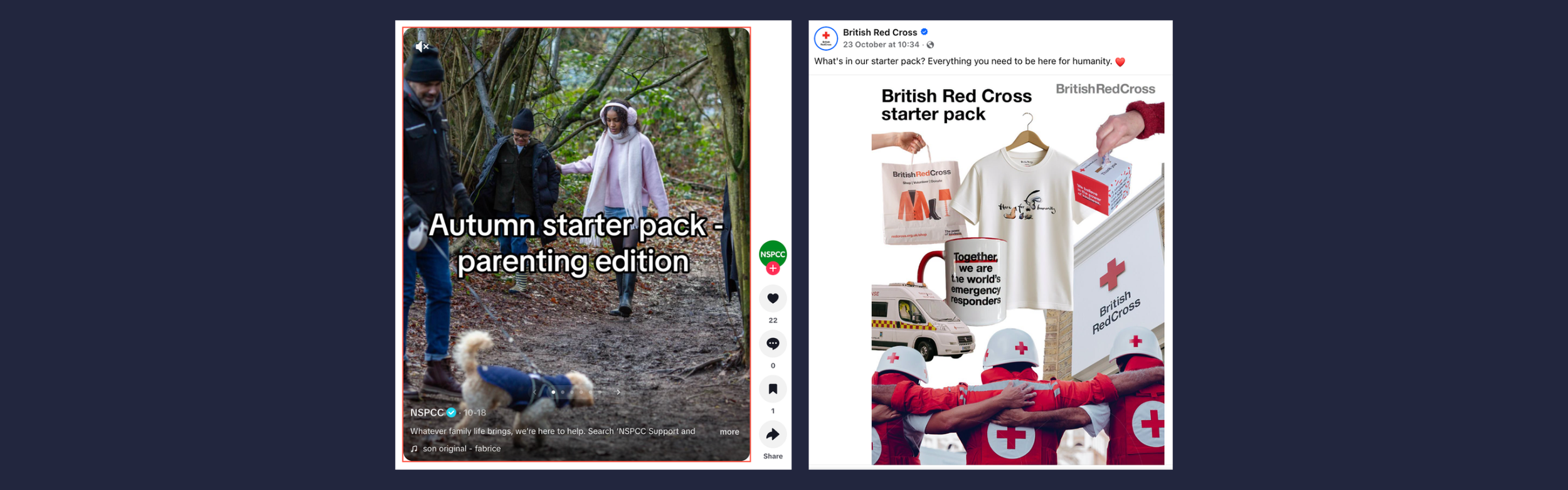
The Scottish Wildlife Trust posted a starter pack just a few days ago. We reckon there’s still time to join in this year before it feels old, or hang around until the next time it starts popping up on feeds.
The evergreens: POV, day in the life, trending sound, & memes
Trends burn bright and fast, but a handful of formats were busy every month. POV was the most used, with 313 posts from 58 charities. Day in the life videos were the most widely adopted: 69 of the 100 charities posted one. Trending audio, reactions and duets, and quizzes (“spot the…”, “guess the…”) all clocked up well over 100 posts each.
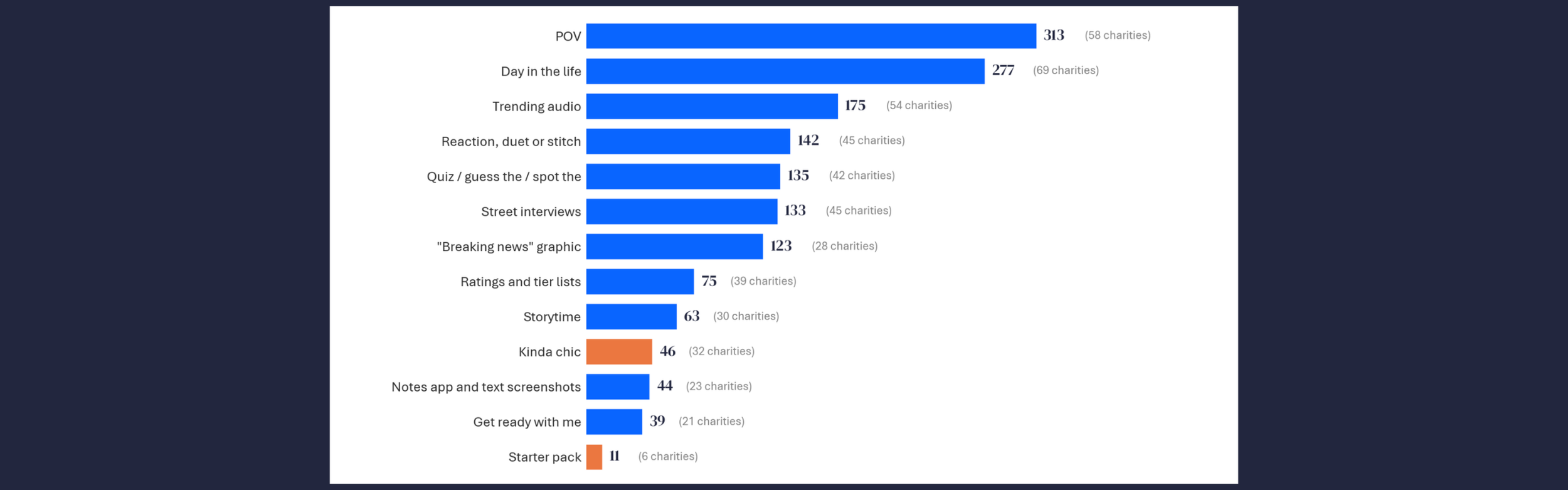
Number of posts using each format, and number of charities using it. Source: nfpResearch Brand Voice library. Base: 24,975 Facebook, Instagram and TikTok posts, June–October 2026.
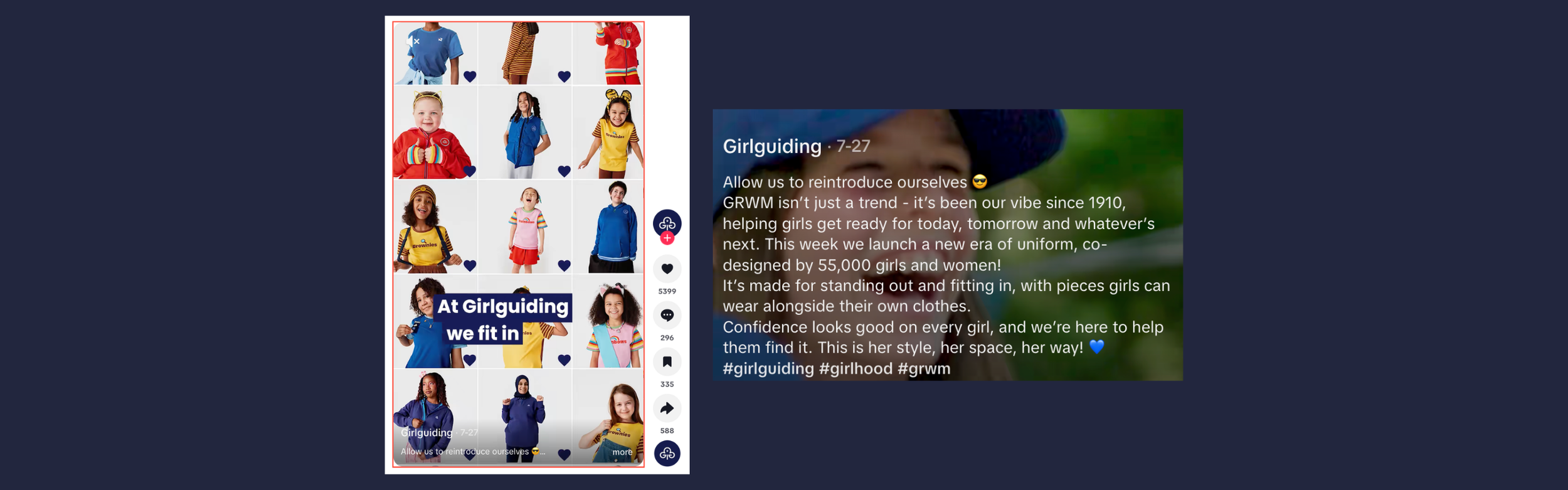
Some formats are cooling off. Street interviews and fake “breaking news” graphics peaked early in the summer and have been fading ever since. Our favourite reclaiming of a trend goes to Girlguiding, who pointed out that “get ready with me” has been their vibe since 1910.
Telly is the new trending audio
If one theme ran through the summer, it was the TV schedule. The Celebrity Traitors turned up in 73 posts from 25 charities, almost all of them in October, with Comic Relief going all in: “Grab your fringe, fake tan and turtlenecks”.
Soaps did some serious work, too. The Stroke Association used Coronation Street’s storyline to talk about stroke, and Children in Need staged its own EastEnders and Coronation Street crossover. Bake Off gave Prostate Cancer UK a contestant to cheer into the tent, and Dogs Trust followed Pete Wicks in its own series, For Dogs’ Sake.
Sport did the same job earlier in the summer. The World Cup and “it’s coming home” ran through June and July. Comic Relief’s Coming Home challenge with Jill Scott pulled in celebrity cheerleaders, Courteney Cox among them.
Memes with a message
Memes make up only about 4% of charity posts, but one charity has made them its own. Greenpeace posted around 170 of the 1,100 or so posts our coding tagged as memes, often political: Trump clips, “prediction vs reality” and old warnings set against this year’s extreme weather.
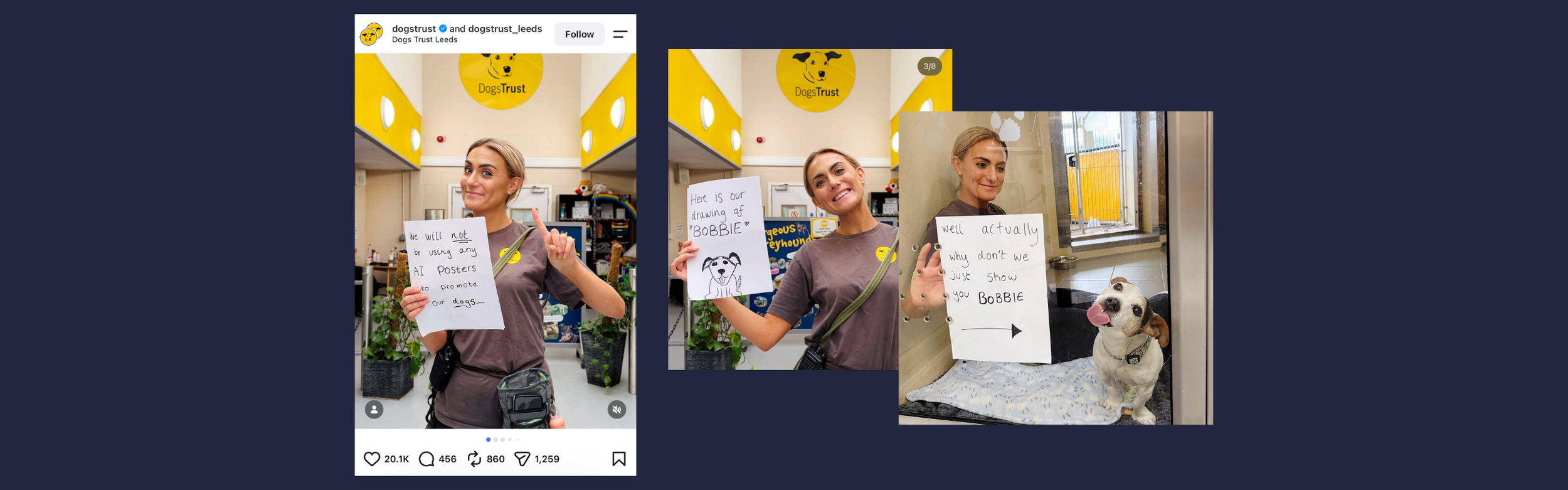
Elsewhere, charities started poking fun at the internet itself. Eight charities, including the RSPCA and Dogs Trust, posted about AI-generated images clogging up everyone’s feeds. Dogs Trust’s answer was to go back to basics, with handwritten posters.
So, does any of it work?
Broadly, yes. We score engagement as a percentile of interactions per follower, so 50 is middling. Posts coded as memes had a median score of 56 and user-generated content 55, against 49 for all posts. Talking-head videos lagged behind at 44.
That is not a licence to meme everything: plenty of those high scores belong to brands that already do humour well. But playful, platform-native formats are clearly earning their place in charity brand’s content calendars.
What else can Brand Voice do?
Trend-spotting is the fun bit. Underneath, Brand Voice is a searchable library of more than 49,000 pieces of public content from the UK’s 100 most-recognised charities across websites, Facebook, Instagram, TikTok, YouTube, DRTV and Meta ads. It’s updated daily, and every item is coded across 54 voice traits covering tone, emotion, brand personality and values.
That means you can:
see how your charity sounds, and where you stand out from (or blend into) your sector
get distinctiveness and consistency scores, and see which traits you over- and under-index on, channel by channel
search the whole sector by format, occasion or tone: every Bake Off post, say, or the most humorous posts in your cause area
compare how you present yourself with how the public actually sees you, if you are an nfpBrand client
see where your voice sits against the ideal for your category
For example, where mental health charities tend towards warmth and care, CALM codes as outspoken, bold and campaigning, and it holds that voice consistently across four channels.
Fancy a closer look?
Brand Voice is still available at its introductory rate. Our first five sign-ups get a bespoke brand voice audit of their charity, channels and sector, plus access to all the coded content in the library, for £3,000 + VAT.
If you would like to see your own charity in the library, or just want to know whether you are still kinda chic, get in touch at insight@nfpresearch.com or call 020 7426 8888.